
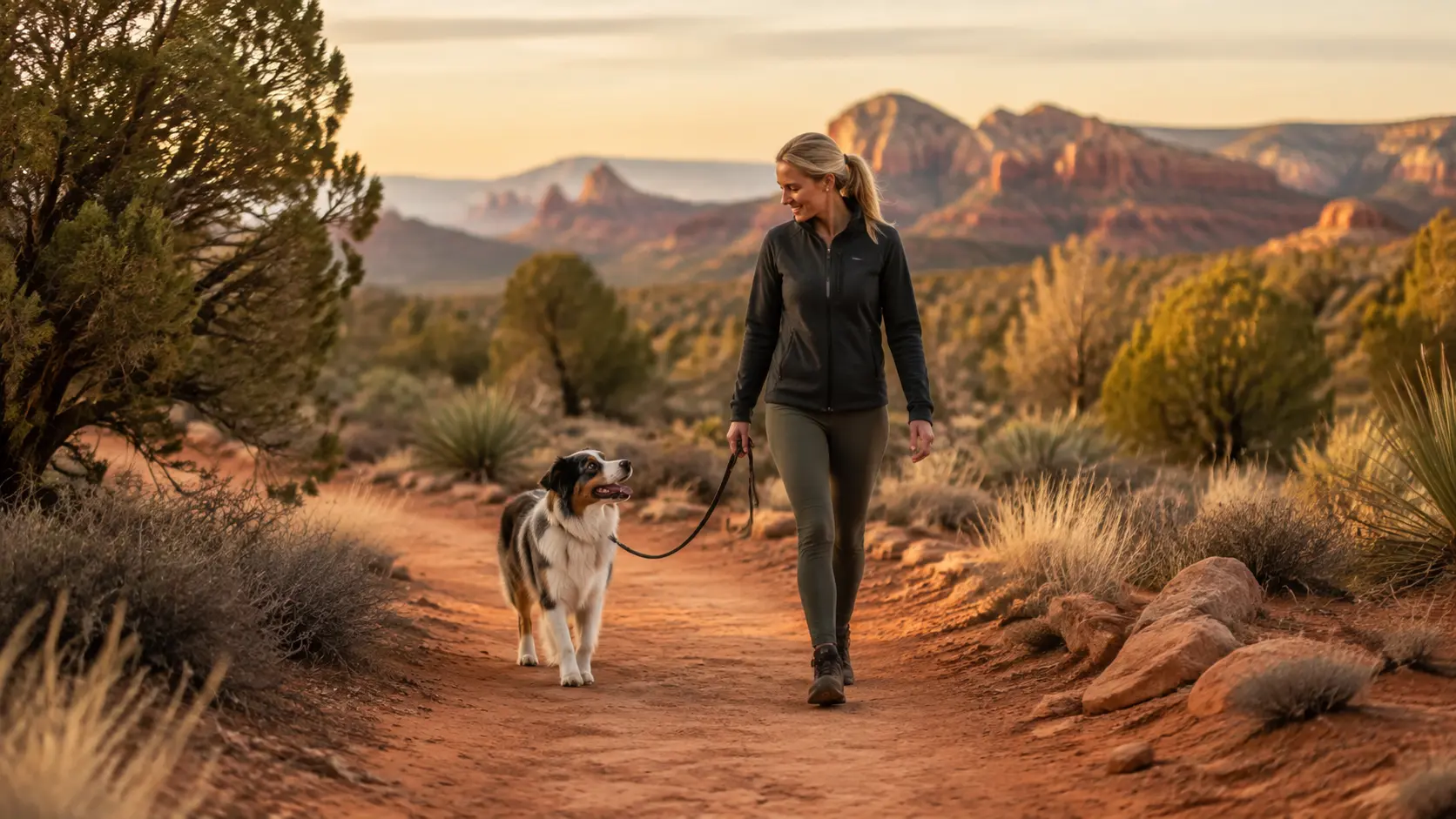
Arizona heat changes how we live with our dogs. Walks, training, travel, and even a quick bathroom break need more thought when temperatures climb.
The goal is simple: give your dog a life that includes activity and companionship while making decisions that keep the heat from becoming an emergency.
That starts before your dog shows signs of trouble.
Change the Routine Before the Heat Becomes a Problem
Move walks and outdoor training to the coolest part of the day. Early morning is often the better choice, but check the actual conditions. A sunset does not immediately cool the ground.
On hot days, shorten the outing, reduce the intensity, or stay inside. Practice obedience, play a scent game, or give your dog a food puzzle in an air-conditioned room.
There is no single outdoor temperature that makes every activity safe for every dog. Consider the sun, humidity, surface, length of the outing, and your dog's health and conditioning.
Short-nosed dogs, overweight dogs, and dogs with health problems need particular caution. Ask your veterinarian about your dog's individual limits.
Check What Your Dog Will Be Standing On
Before walking onto pavement, concrete, artificial turf, or another exposed surface, check it yourself.
Place your hand against the surface before asking your dog to walk on it. If you cannot comfortably leave your hand there, find a cooler place to walk. Even when the ground feels comfortable, your dog can still overheat.
Choose cooler surfaces and shade where available. Properly fitted boots may help protect paws, but they do not protect the rest of the dog from overheating.
For bathroom breaks, use the shortest practical route to a suitable area and return to a cool space.
Make Water and Cooling Easy to Reach
Keep fresh drinking water available and check bowls throughout the day. Put outdoor bowls in the shade, where they are less likely to become hot or get knocked over. Multiple dogs may need more than one water station.
Bring water and a bowl whenever you take your dog out. Offer regular opportunities to drink and rest.
Shade helps, but a shaded yard can still be dangerously hot. Your dog needs somewhere genuinely cool to recover. During extreme heat, plan around access to air conditioning.
Water, a fan, or a cooling vest should not become a reason to extend an outing that needs to end.
Make the Stopping Decision for Your Dog
An enthusiastic dog may keep chasing a ball, working, or following you long after you should have stopped.
A dog willing to continue is not proof that continuing is safe.
Keep outdoor activity short and let your dog cool down indoors before doing more. Watch for heavier panting, a slower pace, or changes in behavior. If you notice any of these, end the activity and begin cooling your dog.
This matters with high-drive dogs, including protection dogs. Their willingness to work does not remove our responsibility to set limits.
Plan Travel Around the Dog
Cool the vehicle before loading your dog. Check that conditioned air actually reaches the place where the dog rides, especially inside a crate or toward the rear of the vehicle.
Never leave your dog unattended in a parked vehicle. Cracked windows and shade do not provide reliable protection.
For longer trips, think through the stops before leaving:
- Where can the dog take a bathroom break without crossing hot pavement?
- Where can you both go into an air-conditioned space?
- Do you have extra water if the trip takes longer than expected?
- What will you do if the vehicle's air conditioning fails?
Temperature monitors and alerts can add information, but they depend on power, equipment, and sometimes a cellular connection. They cannot replace supervision or a plan to move the dog somewhere cool immediately.
The same thinking applies to RVs, trailers, and home cooling systems: know what you will do if cooling stops.
Recognize Trouble and Act Immediately
Warning signs can include unusually heavy panting, excessive drooling, reluctance to move, abnormal gum or tongue color, vomiting, or diarrhea. Weakness, confusion, stumbling, breathing difficulty, or collapse require immediate action.
If you suspect heatstroke, begin cooling immediately and contact an emergency veterinarian.
1. Stop the activity and move the dog to a cooler place.
2. Apply cool running water over the body, soaking through the coat to the skin. Avoid directing water into the nose or mouth. Check hose water first; water sitting in an Arizona hose can be hot.
3. Use a fan or air conditioning to provide airflow over the wet dog.
4. If the dog is alert and can swallow normally, offer small drinks. Do not force water.
5. Call the emergency veterinarian as cooling begins and arrange transport in a cooled vehicle. Follow their instructions about continued cooling.
Do not wrap the dog in wet towels or wait to see whether rest alone fixes the problem.
A dog that appears to recover still needs veterinary assessment after suspected heatstroke. Serious internal injury may not be obvious immediately.
Protecting Your Dog Is Part of Living Well Together
You do not have to fill every hot day with outdoor exercise. A shorter morning walk, a few minutes of indoor training, and time resting with the family may be the better routine.
At Armor K9, good leadership includes knowing when to change the plan.
Our dogs depend on us to choose the route, control the pace, and end the activity. In Arizona, those ordinary decisions are a large part of protecting what matters most.