Introduction
Choosing a personal protection dog is unlike choosing any other dog. You are not simply selecting a companion. You are welcoming into your home a disciplined working partner that will share in your family’s daily life, travel beside you, and faithfully serve those entrusted to its care. For that reason, the decision deserves far more consideration than comparing breeds, watching online demonstrations, or asking which dog bites the hardest. Unfortunately, much of the information available today places its emphasis in the wrong places. Spectacular demonstrations often receive more attention than stable temperament. Intensity is mistaken for capability. Excitement is confused with confidence. In many cases, prospective owners are encouraged to judge a protection dog by its willingness to engage rather than by the qualities that allow it to live safely and successfully within a family.
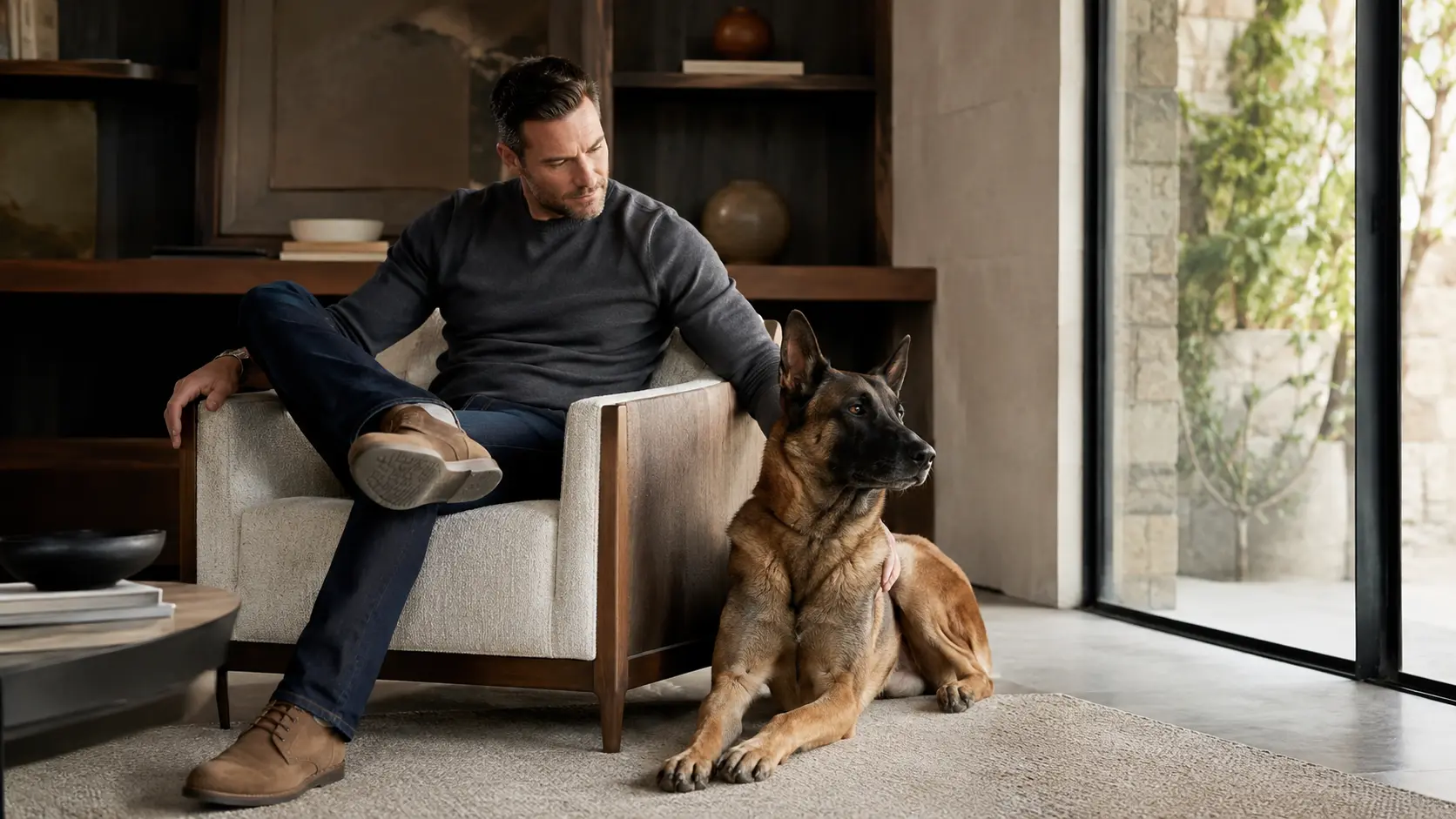
Professional dog men and women understand that these are not the characteristics that define an exceptional protection dog. The true measure of a protection dog is not found in moments of conflict. It is found in the thousands of ordinary moments that make up everyday life. A properly developed protection dog should accompany its family with quiet confidence. It should move comfortably through the home without creating tension. It should remain composed around children, respectful guests, unfamiliar environments, and the ordinary distractions of daily living. It should demonstrate discipline long before it is ever asked to demonstrate protection. Protection is not the dog’s identity. It is one responsibility among many.
The dog’s greater purpose is faithful service to the family it has been entrusted to protect. That distinction is more than a matter of language. It reflects the philosophy behind responsible breeding, thoughtful selection, disciplined training, and successful ownership. At Armor K9, we believe the family always comes first. Every recommendation we make, every dog we develop, and every placement we complete begins with that principle. The purpose of the protection dog is not to become the center of the household. Its purpose is to strengthen the safety, confidence, and freedom of the family it serves. Everything else follows from that understanding.
The Purpose of a Protection Dog
Before learning how to evaluate a protection dog, it is important to understand what a protection dog is—and what it is not. A protection dog is not an aggressive dog. It is not a dog that lives in a constant state of vigilance. It is not an animal that searches for conflict or responds emotionally to every unfamiliar situation. Nor is it a substitute for responsible judgment, sound decision-making, or personal awareness. A professionally developed protection dog is a disciplined working dog whose training prepares it to respond reliably under the leadership of its handler while remaining safe, stable, and trustworthy in everyday life. That distinction cannot be overstated.
Much of the public’s understanding of protection dogs has been shaped by movies, social media, and carefully edited demonstration videos. These portrayals often emphasize dramatic moments while overlooking the qualities that professionals spend years developing. The reality is far less theatrical—and far more impressive. A truly exceptional protection dog spends nearly all of its life doing nothing remarkable. It rides quietly in the vehicle. It rests peacefully at home. It accompanies the family on walks. It greets familiar friends appropriately. It settles when asked. It ignores unnecessary distractions. It remains attentive without becoming anxious. These ordinary behaviors are not secondary to protection training. They are the foundation upon which protection training is built.
Without emotional stability, obedience becomes unreliable. Without obedience, control is diminished. Without control, protection loses its purpose. The objective has never been to create a dog that is eager to engage. The objective is to develop a dog that is prepared, disciplined, and completely trustworthy under the guidance of its training. Professionals understand that the greatest compliment a protection dog can receive is often the simplest one:
“I would never have known it was a protection dog.”
That observation reflects everything responsible training seeks to achieve. The dog has blended naturally into family life. It has earned trust through consistency. It has demonstrated confidence without unnecessary display. When protection is never required, it remains an exceptional family companion. When protection is required, it performs with discipline, confidence, and control. That is the standard toward which responsible programs should strive.
Temperament: The Foundation of a Protection Dog
If there is one characteristic a prospective owner should learn to evaluate before anything else, it is temperament. Not appearance. Not breed. Not the intensity of a protection demonstration. Temperament. A protection dog can possess exceptional physical ability, impressive obedience, and powerful protection skills, but if the dog’s underlying temperament is unsound, those accomplishments have limited value. For a dog entrusted to live alongside a family, stability must come first.
Confidence Is Not Aggression
One of the most persistent misconceptions surrounding protection dogs is that aggression is desirable. It is not. Aggression and confidence are not interchangeable, and confusing the two can lead prospective owners toward precisely the type of dog they should avoid. A confident dog does not need to prove itself to everything it encounters. It can enter an unfamiliar environment without becoming overwhelmed. It can observe another dog without needing to challenge it. It can encounter a stranger without assuming that stranger represents a threat. It can hear an unexpected noise, recognize the change in its environment, and remain composed. That composure is strength. A dog that constantly barks, lunges, challenges, or reacts may look impressive to an inexperienced observer. But activity should never be confused with capability.
In many cases, excessive reactivity tells us far more about what a dog cannot comfortably handle than what it can. A professionally developed protection dog should possess enough confidence that ordinary life remains ordinary.
The strongest dog in the room should rarely need to prove it.
That principle matters enormously when the dog will live with a family.
Stability Must Exist Outside the Training Field
Protection demonstrations can tell us something about a dog. They cannot tell us everything. A controlled training environment is exactly that: controlled. The dog understands the environment. The trainer understands the exercise. Equipment may be present. The sequence may be familiar. Everyone involved knows what is expected. Family life provides no such predictability. A child drops something behind the dog. A delivery person approaches the house. Guests arrive unexpectedly. Someone runs through an airport terminal. A waiter passes close to the table. Another dog barks from across the street. A suitcase falls from the back of a vehicle. The family travels somewhere the dog has never been.
These are not protection scenarios. They are life. And the dog’s response to them tells an experienced evaluator an enormous amount about its temperament. A protection dog must be capable of distinguishing through its training between situations in which it has been given a job and the countless situations in which nothing is required of it. Its default condition should not be suspicion. Its default should be stability.
The Ability to Do Nothing
Some of the most important work a protection dog ever learns is to do nothing. That may sound strange in an industry that often emphasizes action. It should not. A dog living with a family will spend vastly more time being asked to remain neutral than being asked to perform any protection task. It must be able to lie quietly while people talk. Wait without demanding attention. Ignore another dog. Watch someone approach without unnecessarily reacting. Travel without becoming overstimulated. Remain settled when the environment changes. In working dogs, we often spend considerable time discussing what a dog is capable of doing. Experienced handlers also pay close attention to what the dog is capable of not doing.
Can it resist unnecessary stimulation? Can it remain composed? Can it wait? Can it accept that nothing is being asked of it? Can it remain under the handler’s direction even when something in the environment captures its attention? These are expressions of temperament and training working together.
Control is not simply the ability to stop a dog. True control begins with a dog that does not need to be constantly stopped.
For a family protection dog, that distinction is fundamental.
Recovery Matters
No dog moves through life without encountering stress. The more useful question is what happens afterward. A loud noise may surprise a dog. An unfamiliar surface may cause hesitation. A new environment may require a moment of evaluation. Those reactions alone do not necessarily indicate poor temperament. Professionals watch what happens next. Does the dog recover? Does confidence return? Does the dog remain responsive to its handler? Can it continue working? Or does the experience remain with the dog, affecting its behavior long after the event has passed? Recovery is one of the most valuable characteristics in a working dog because the real world cannot be controlled.
A protection dog will encounter things during its lifetime that no trainer could possibly reproduce during development. Strong genetics, proper exposure, and thoughtful training prepare the dog to move through those experiences without losing confidence or control. The objective is not a dog that never notices pressure. It is a dog that can experience pressure without being governed by it.
Social Stability Does Not Mean Socializing With Everyone
Another distinction deserves attention. A socially stable protection dog does not need to interact with every person or dog it encounters. Nor should friendliness be confused with stability. The goal is neutrality. A stable dog can acknowledge the presence of people, animals, noises, and activity without feeling compelled to interact with them. This becomes particularly important for families who travel or routinely bring their dog into appropriate public environments. The dog does not need to greet everyone. It needs to behave appropriately around everyone. There is a considerable difference. A dog that requires constant interaction can become as difficult to manage as one that reacts negatively to everyone around it. Neither represents the neutrality we seek.
The ideal protection dog is comfortable existing in the world without believing the world revolves around it.
Temperament and the Family
This is where the evaluation becomes personal. There is no universally perfect protection dog. A dog may possess excellent temperament and still be wrong for a particular family. A household with young children may require different characteristics from a single experienced handler. A family that entertains frequently presents a different environment from someone living privately on a large property. A client who travels regularly may need a dog capable of transitioning comfortably between vehicles, hotels, unfamiliar homes, and changing environments. An experienced working-dog owner may enjoy characteristics that would unnecessarily complicate life for a first-time owner. None of these differences make one family better than another or one dog superior to another.
They make proper selection essential. The question should therefore never be:
“Is this a good dog?”
The better question is:
“Is this the right dog for this family?”
That is a much higher standard.
Genetics: We Can’t Train Genetics
Once temperament is understood, genetics must be considered. There is a principle experienced dog trainers learn sooner or later:
We can’t train genetics.
Training can develop what is already there. We can build communication, strengthen obedience, develop skills, expose a dog to new environments, and teach it to perform its work with greater reliability and control. But training cannot replace what genetics failed to provide. We cannot train sound nerves into a dog that does not possess them. We cannot manufacture true confidence through repetition, and we cannot permanently cover instability with obedience and call the result a stable dog. As much as trainers might occasionally wish otherwise, we aren’t Gandalf. There is no magic wand we can wave over a dog and change its genetics. Good training develops the dog in front of us.
It does not rewrite the dog. That is why the development of an exceptional protection dog begins long before formal protection training. It begins with genetics.
The Pedigree Is More Than a List of Names
A pedigree has value only when the dogs behind it are understood. Titles can provide useful information. Working accomplishments can provide useful information. Health records matter greatly. But experienced breeding requires more than collecting impressive names on paper. What characteristics repeatedly appear within the family? How stable are the dogs? How do they mature? How do they handle pressure? What health concerns exist? How long do they remain physically sound? What characteristics are being produced consistently rather than occasionally? A responsible breeding program studies families of dogs, not simply individual animals. The objective is predictability. There will always be variation because dogs are living animals, not manufactured products. But thoughtful breeding increases the probability of producing the qualities required for the work.
Health Is Part of Working Ability
Physical health should never be separated from discussions of performance. A protection dog may possess outstanding temperament and working ability, but if its body cannot comfortably support the work throughout its life, something fundamental has been overlooked. Structural soundness matters. Joint health matters. Conditioning matters. Appropriate veterinary evaluation matters. So does understanding the health history behind the dog. A protection dog is expected to run, jump, travel, train, navigate stairs and changing surfaces, enter and exit vehicles, and remain physically capable throughout years of family life. Health is therefore not simply a veterinary consideration. It is part of the dog’s suitability for the job.
Selection Is an Exercise in Judgment
Good breeding creates possibilities. Selection determines which of those possibilities should continue toward protection work. Not every well-bred dog should become a protection dog. That is not failure. It is responsible selection. As a young dog develops, experienced professionals continually evaluate temperament, environmental confidence, physical development, working characteristics, trainability, and recovery. Some dogs reveal qualities that make them excellent candidates. Others may be better suited to different work or simply to life as outstanding companions. Responsible programs are willing to make that distinction. There is a temptation in any commercial environment to make the available dog fit the available customer. Professional selection requires the opposite approach.
We do not change the standard to fit the dog. We select the dog that meets the standard.
That principle protects everyone involved—the trainer, the client, the family, and ultimately the dog.
The Right Dog Is Chosen Before It Is Sold
By the time a finished protection dog is presented to a family, many important decisions should already have been made. The dog’s genetics have been evaluated. Its temperament has been observed over time. Its physical health has been considered. Its ability to learn and work has been tested. Its response to pressure has been observed. Its behavior in everyday environments has been evaluated. And, perhaps most importantly, responsible professionals should have developed a clear understanding of what type of home and handler will allow that particular dog to succeed. This is why selecting a protection dog should never resemble choosing an automobile from a row of available models.
The most visually impressive dog may not be the right dog. The dog displaying the greatest intensity may not be the right dog. The most expensive dog may not be the right dog. And the dog a client initially believes he or she wants may not be the dog that professional evaluation ultimately recommends. The purpose of professional guidance is not simply to help someone purchase a protection dog. It is to help them choose correctly. Because once the dog enters the home, the consequences of that decision become part of everyday family life. And the family comes first.
Training, Leadership, and Control
Genetics gives us the dog. Training teaches that dog how to serve. For a family protection dog, that training must establish more than capability. It must establish communication, discipline, and a clear relationship between dog and handler. The dog may possess extraordinary working ability, but ability alone does not determine whether that dog can responsibly serve a family. Leadership gives that ability direction. Obedience keeps it under control. And both begin with understanding who is responsible for making the decisions.
The Handler Leads
At Armor K9, we use a simple analogy to explain the relationship between a protection dog and its handler:
The handler is the General. The dog is the Private.
The General makes the decision. The Private executes the order. The analogy is intentionally simple because it establishes something fundamental about responsible protection training: the dog does not occupy the top of the chain of command. The handler does. A protection dog should not be presented as an independent security system roaming through life deciding who is dangerous and when action should be taken. That is not the relationship we are trying to create. The dog has a clearly defined role. It has been trained to perform that role, and it performs under leadership. This does not diminish the dog’s intelligence or ability. Quite the opposite.
A disciplined working dog must possess enough confidence, clarity, and training to remain responsive to its handler even when the environment becomes demanding. The dog may be capable of extraordinary things. But capability does not transfer authority.
The handler makes the decision. The dog executes its training.
That is the chain of command.
Obedience Is Protection
At Armor K9, we believe something that may sound simple:
Obedience is protection.
Protection is too often reduced to a dog’s ability to engage a threat. That is only one small part of a much larger responsibility. A dog that comes immediately when called is protecting. A dog that remains where it has been placed instead of entering an unsafe situation is protecting. A dog that stays neutral when there is no reason to engage is protecting. A dog that remains responsive to its handler while distractions and pressure increase is protecting. And a dog that immediately disengages when commanded is protecting. All of those behaviors have one thing in common: Obedience. The protection work may demonstrate what the dog is physically capable of doing. Obedience determines whether that capability can be responsibly used.
That is why we do not view obedience as something that comes before protection training and is later replaced by more advanced work. Obedience is the advanced work. As the dog’s capability increases, the standard for obedience must increase with it. The dog should remain responsive before the work begins, while performing the work, and after the work has ended. There should never be a point at which drive, excitement, or intensity becomes more important than the handler’s direction.
Capability gives the dog power. Obedience keeps that power under control.
For a family protection dog, one without the other is incomplete.
Control Under Pressure
Almost any dog can appear obedient when nothing interesting is happening. The real test comes when the environment competes for the dog’s attention. Another dog passes nearby. A stranger approaches. Someone knocks at the door. A child runs across the room. The dog becomes excited. The environment changes unexpectedly. Or the dog is performing protection work and its natural drives are fully engaged. Can the handler still communicate with the dog? Does the dog still listen? Can it transition from activity back to neutrality? Can the handler interrupt behavior immediately? Can the dog remain mentally present rather than becoming consumed by the stimulation in front of it?
That is where training becomes meaningful. The objective is not to eliminate the dog’s drives. Those drives are part of what makes the dog capable of performing its work. The objective is to develop enough discipline that drive remains subordinate to training. A dog should not become less obedient as pressure increases. Its training should have prepared it for exactly that moment.
The Importance of the Out
Few exercises demonstrate the relationship between capability and control more clearly than the out. Teaching a dog to engage in protection work is only part of the responsibility. Teaching that same dog to disengage immediately when commanded is essential. When the handler gives the command, the work ends. Not when the dog becomes tired. Not when the dog loses interest. Not when someone physically removes it. When the handler says it ends. That is why the out represents much more than a training exercise. It demonstrates the hierarchy of the relationship. Drive does not outrank obedience. Excitement does not outrank obedience. Protection does not outrank obedience.
The handler remains in command. A powerful dog that cannot be stopped reliably is not more impressive than a controlled dog. It is less complete.
Starting the work demonstrates capability. Stopping the work demonstrates training.
Both matter.
Protection Is a Controlled Skill
The word “protection” can create the wrong picture in people’s minds. Some imagine a dog constantly evaluating everyone around the family, waiting for an opportunity to intervene. That is not what we want. A properly developed protection dog should be comfortable allowing the handler to lead. The dog does not need to carry the responsibility of determining how every interaction should unfold. That responsibility belongs to the person holding the other end of the relationship. The dog’s responsibility is different. Remain composed. Remain responsive. Follow direction. Perform the trained behavior when called upon. Stop when instructed. Return to neutrality. This structure provides clarity for both dog and handler.
The family should not spend its life wondering what the dog is going to do. They should know. Predictability is one of the greatest benefits of disciplined training.
Training for the Other 99 Percent of Life
Protection work naturally attracts attention. It is dramatic. Everyday obedience is not. Yet everyday obedience is what the family will live with. A protection dog may go its entire life without ever being required to perform its protection work outside of training. We would consider that a very good outcome. But that same dog will be asked to walk through doorways, ride in vehicles, settle in the home, ignore distractions, accompany the family, accept visitors appropriately, come when called, remain where it is placed, and follow direction thousands upon thousands of times. Those behaviors determine what the dog is like to live with. For that reason, a prospective owner evaluating a protection dog should spend at least as much time watching the dog do ordinary things as watching protection work.
Watch the dog walk with its handler. Watch it enter and exit a vehicle. Watch it settle. Watch what happens when nothing is happening. Watch how it responds when distracted. Watch how quickly it accepts direction. Watch the relationship between dog and handler. A dramatic protection demonstration may last several minutes. Daily life lasts years. Choose accordingly.
Leadership Does Not Mean Conflict
Leadership is sometimes misunderstood in dog training. It does not require constant correction, physical confrontation, or continually proving dominance over the dog. Good leadership creates clarity. The dog understands what is expected. The handler communicates consistently. Standards remain predictable. Training establishes a language both understand. When that relationship is developed correctly, the handler should not need to spend every day arguing with the dog. A well-trained dog learns that following direction is simply part of life. This is particularly important when a protection dog transitions from a professional trainer to its new owner. The owner does not need to become a professional dog trainer. But the owner does need to become a competent handler.
There is a difference.
The Owner Must Be Trained Too
A finished protection dog is only half of the equation. The handler must understand how to use what has been developed. Commands must be understood. Timing must be learned. Expectations must remain consistent. The handler needs to recognize what the dog is communicating and understand how his or her own behavior influences the dog. This is why transferring a protection dog should never amount to handing someone a leash, explaining a few commands, and wishing them well. There must be a transfer of knowledge along with the transfer of the dog. The professional trainer has spent considerable time establishing communication, expectations, and structure. The new handler must learn how to maintain them.
This does not mean recreating years of professional training. It means teaching the owner how to lead the dog that has already been trained. The distinction is important. The owner should not need to rebuild the dog. The owner needs to learn how to operate within the system the dog already understands.
Leadership Creates Freedom
There is an apparent contradiction in advanced dog training. The more reliable the control, the more freedom the dog can often enjoy. A dog with an unreliable recall must be physically managed more carefully. A dog that cannot remain neutral around distractions requires greater environmental control. A dog that does not understand boundaries requires constant supervision. But as reliability increases, possibilities increase with it. The dog can participate in more of family life because the family can trust its training. This is one reason obedience should never be viewed merely as a collection of commands. Obedience creates access. It allows a capable working dog to live comfortably within a human world.
The goal is not control for control’s sake. The goal is a dog whose training gives the family confidence to include it in their lives.
A Protection Dog Should Bring Confidence, Not Responsibility Without Support
There is another standard prospective owners should consider. Living with a protection dog should not feel like managing a problem. Certainly, ownership carries responsibility. Any capable working dog requires structure, leadership, appropriate care, and continued maintenance of its training. But the dog should not consume the household. The family should not reorganize its entire existence around managing unstable behavior. Guests should not create a crisis. Travel should not become impossible. Every unfamiliar situation should not require elaborate preparation. Remember the principle established at the beginning of this guide:
The family comes first. The dog comes second.
Training exists partly to make that possible. The dog is being prepared to enter the family’s life. The family is not being recruited into the dog’s life. That difference should remain visible throughout the training and placement process.
Capability Without Control Is Not Protection
There is a tendency to evaluate protection dogs by what they are willing to do. Experienced professionals must also evaluate them by what they are willing to stop doing. Can the dog engage? Important. Can the dog disengage? Equally important. Can the dog work under pressure? Important. Can it remain obedient under pressure? More important still. Can the dog demonstrate power? Important. Can that power remain under the handler’s control? Essential. This is ultimately why leadership, obedience, and protection cannot be separated. A protection dog’s capability exists to serve the family. Its training makes that capability usable. Its obedience keeps that capability under control. And its handler provides the leadership that gives that capability direction.
The General leads. The Private executes. Neither role needs to be confused for the relationship to work.
How to Evaluate a Protection Dog
By this point, an important pattern should be becoming clear. The qualities that matter most in a protection dog are rarely the qualities that are easiest to advertise. Power photographs well. Intensity makes exciting video. A dramatic protection demonstration captures attention. Stability does not. Neither does neutrality, patience, recovery, obedience, or the ability to lie quietly while a family goes about its day. Yet those are precisely the qualities a family will live with. For that reason, evaluating a protection dog requires looking beyond the demonstration and asking a more important question:
What is this dog like when it is not performing?
That is where a serious evaluation should begin.
Watch the Dog Before You Watch the Demonstration
Whenever possible, observe the dog before formal work begins. This is valuable because the dog has not yet been told exactly what is about to happen. Watch how it enters the environment. Is it comfortable? Does it appear confident? Is it constantly scanning? Does it need to investigate everything around it? Can it settle? How does it respond to unfamiliar people? How does it respond when something unexpected occurs? Most importantly, pay attention to the relationship between the dog and its handler. Does the dog remain aware of the handler without requiring constant management? Does it accept direction easily? Does the handler appear to be communicating with the dog, or continually negotiating with it?
A trained routine can be rehearsed. Temperament is much harder to rehearse. The moments between exercises often tell us as much as the exercises themselves.
Ask to See the Ordinary
Prospective owners understandably want to see protection work. They should. If someone is considering purchasing a professionally trained protection dog, there is nothing unreasonable about asking to see the dog’s capabilities demonstrated. But do not stop there. Ask to see obedience. Ask to see the dog settle. Watch the dog around distractions. Watch it move through an unfamiliar environment. Watch it enter and exit a vehicle. Watch the recall. Watch the dog remain in position while activity occurs around it. Watch how it behaves when another person speaks with the handler. And then watch the dog when nobody is asking it to do anything at all.
Anyone evaluating a protection dog should be as interested in the dog’s off switch as its on switch.
That balance matters enormously in a family environment.
Obedience Is Protection
Earlier, we established one of the most important principles in this guide:
Obedience is protection.
Nowhere is that principle more useful than during an evaluation. Do not evaluate obedience merely by asking whether the dog knows commands. Most trained dogs know commands. Evaluate whether the commands remain meaningful when circumstances become difficult. A sit on a quiet training field tells us something. A sit when the dog is excited tells us more. A recall with nothing competing for the dog’s attention is useful. A recall away from something the dog genuinely wants is much more revealing. An out during a familiar exercise matters. An immediate out when the dog’s drives are fully engaged matters considerably more. The question is not simply whether the dog has learned obedience.
The question is whether obedience remains intact when obedience matters most. That is protection.
Watch the Transitions
Individual exercises can be impressive. Transitions reveal training. Watch what happens when the dog moves from rest to work. Then watch what happens when the work ends. Can the dog move from obedience into protection work without becoming chaotic? Can it move from protection work back into obedience? Can it disengage cleanly? Can it return to neutrality? Can it settle afterward? This ability to transition between states is one of the characteristics prospective owners frequently overlook. A family protection dog does not live permanently in one mode. Throughout its life it will continually transition. Home to vehicle. Vehicle to public environment. Rest to obedience. Excitement to calm.
Work to neutrality. The smoother and more reliable those transitions are, the easier the dog generally becomes to integrate into daily life. A dog should not need twenty minutes to mentally recover every time something exciting happens. When the work ends, the dog should understand that the work has ended.
Do Not Confuse Equipment With Reality
Protection demonstrations often involve specialized training equipment. There is nothing inherently wrong with that. Proper equipment allows trainers to develop and evaluate dogs safely. But prospective owners should understand what they are watching. A dog that has learned to become excited by a particular sleeve, suit, location, or routine may demonstrate trained behavior without necessarily demonstrating the broader understanding a buyer assumes he is seeing. This is where thoughtful questions become important. What exactly has the dog been trained to do? How is that behavior initiated? What commands does the dog understand? How is the dog stopped? How does the dog respond when familiar equipment is absent?
How does obedience change when the dog becomes highly stimulated? The purpose of asking these questions is not to challenge the trainer. It is to understand the dog. A professional should be able to explain what you are seeing without hiding behind terminology or theatrics.
Evaluate the Out
If there is one protection exercise a prospective owner should watch carefully, it is the out. People naturally watch the engagement. Professionals watch the release. When the handler gives the command, does the dog disengage promptly? Does the handler need to repeat the command? Does the dog remain mentally engaged with the handler afterward? Can it immediately perform another obedience command? Can it return to a controlled position? Can it settle? These details matter. Remember:
Starting the work demonstrates capability. Stopping the work demonstrates training.
A dog that possesses tremendous power but cannot reliably surrender that power to the handler’s command is not demonstrating a higher level of protection. It is demonstrating a lower level of control.
Look at the Handler
Sometimes the easiest way to evaluate a dog’s training is to stop watching the dog. Watch the handler. How much physical effort is required to control the dog? How often are commands repeated? How much equipment is necessary? Does the handler appear relaxed and confident? Does the dog respond to normal communication, or does every interaction become a contest? Good training often looks surprisingly uneventful. The handler gives direction. The dog responds. Life continues. There should be very little drama in that exchange. If controlling the dog requires exceptional physical strength, constant correction, or professional-level timing, ask yourself what happens when that dog goes home with a family that does not train dogs for a living.
The finished dog must ultimately work for its owner—not only for the professional who trained it.
Ask Who in the Family Can Handle the Dog
This question is frequently overlooked. Perhaps one member of the household is physically strong, experienced with working dogs, and enthusiastic about training. What about everyone else? Can a spouse comfortably handle the dog? What happens when another responsible adult needs to walk it? How does the dog fit into a household with children? Who will maintain the dog’s structure when the primary handler is traveling? These questions should be considered before placement, not discovered afterward. The goal is not to find a dog that one person in the family can control. The goal is to select a dog appropriate for the household in which it will actually live.
The family comes first. The dog comes second.
Do Not Buy the Demonstration
This may be one of the most important pieces of advice in this guide:
Do not buy the demonstration. Buy the dog you have evaluated.
A demonstration is a moment in time. It can show valuable information, but it can also direct your attention toward exactly what someone wants you to see. The family will not live with the demonstration. They will live with the dog. They will live with its temperament. Its energy. Its habits. Its obedience. Its confidence. Its limitations. Its health. Its training. And its compatibility with their lifestyle. That is why a professional evaluation looks beyond performance. The question is never simply:
“What can this dog do?”
The more important question is:
“What will living with this dog be like?”
Questions to Ask Before Purchasing a Protection Dog
A reputable professional should welcome informed questions. In fact, thoughtful questions often make the selection process easier because they reveal what the prospective owner actually needs. Before purchasing a protection dog, consider asking:
Why was this particular dog selected for protection work?
What can you tell me about its genetics and pedigree?
What health evaluations have been completed?
How would you describe its temperament?
What environments has the dog experienced?
What obedience does the dog perform reliably?
How does the dog behave around appropriate guests?
How does it respond around children?
How does it respond around other animals?
What protection behaviors has it been trained to perform?
How are those behaviors initiated?
How are they stopped?
Can I see the dog disengage and return immediately to obedience?
What happens if I give a command incorrectly?
What maintenance training will be required?
How will my family be taught to handle the dog?
What happens after the dog comes home?
What ongoing support is available?
Why do you believe this specific dog is appropriate for my family?
That final question deserves particular attention. You are not merely asking a company to describe its dog. You are asking the professional to explain the match. There should be an answer.
The Right Professional Should Be Willing to Say No
There is another characteristic prospective owners should look for, and it has nothing to do with the dog. A professional should be willing to tell you no. No, this dog is not right for your household. No, that level of dog is unnecessary for your needs. No, the dog you prefer visually is not the dog we would recommend. No, your current circumstances may not be appropriate for ownership yet. Those conversations can cost a company a sale. They can also prevent a bad placement. That distinction tells you something about the priorities of the person advising you. A protection dog is going to become part of someone’s family. The responsibility to make the correct match should outweigh the desire to complete a transaction.
A professional’s responsibility is not to sell you the dog you want. It is to help you select the dog you should own.
Sometimes those are the same dog. Sometimes they are not. Professional guidance matters most when they are not.
You Are Evaluating Two Things
When purchasing a protection dog, remember that you are actually evaluating two things. You are evaluating the dog. And you are evaluating the people standing behind it. The dog’s temperament, genetics, health, obedience, protection training, and compatibility all matter. So do the professionalism, transparency, judgment, and long-term support of the people who developed and placed that dog. The dog will eventually go home with you. The relationship with the professionals who trained it should not disappear when the vehicle leaves the driveway. A serious protection dog program should understand that placement is not the end of its responsibility. In many ways, it is the beginning of yours.
And the quality of the transition between those two responsibilities can determine whether an exceptional dog becomes an exceptional family protection dog.
Red Flags, Marketing Claims, and Common Misconceptions
The protection dog industry presents a unique challenge to prospective owners. Most people purchasing a protection dog are not professional dog trainers. They should not be expected to be. Yet they are being asked to evaluate an animal whose genetics, temperament, training, and suitability may require years of experience to fully understand. That knowledge gap creates opportunity for good professionals to educate. It also creates opportunity for marketing to replace substance. Beautiful photography, dramatic videos, impressive terminology, expensive equipment, and polished websites can all contribute to a professional presentation. None of them tell you whether the dog is right for your family. This does not mean buyers should become suspicious of everyone they encounter.
It means they should learn where to look.
Marketing can tell you where to look. Education teaches you what to see.
Red Flag: The Protection Work Is the Entire Presentation
Protection work is important. If you are evaluating a protection dog, you should see it. But if nearly everything you are shown involves barking, biting, pursuing, threatening displays, or highly stimulated behavior, you are seeing only a small portion of what you are actually purchasing. Ask to see the rest of the dog. Where is the obedience? Where is the neutrality? Where is the family interaction? Where is the dog settling quietly? Where is the environmental work? Where is the control? Where is the off switch? A protection dog should be capable of doing serious work. It should also be capable of doing absolutely nothing.
For most families, the second skill will be used far more often than the first.
Red Flag: Aggression Is Presented as a Feature
Aggression is easy to market because it looks powerful. Stability is harder to demonstrate in a thirty-second video. Do not confuse the two. A dog that reacts unnecessarily to strangers, other animals, movement, noise, or unfamiliar environments should not automatically be interpreted as protective. It may simply be reactive. Likewise, constant barking, lunging, pacing, or fixation should not be romanticized as vigilance without understanding what is actually driving the behavior. Protection requires capability. Family life requires stability. The dog needs both.
A dog does not become safer because its undesirable behavior has been given an impressive name.
If something concerns you, ask about it. A knowledgeable professional should be able to explain what you are observing.
Red Flag: The Dog Cannot Be Turned Off
We have already discussed the importance of transitions. During an evaluation, watch them carefully. After protection work ends, what happens? Does the dog return to obedience? Can it disengage mentally as well as physically? Can it stand calmly near the person who was involved in the training exercise when appropriate? Can it settle? Or does the dog remain highly stimulated long after the exercise has ended? A protection dog should understand when it is working and when it is not. The family should not have to live with a dog that remains emotionally trapped in the previous exercise. The ability to turn on is useful.
The ability to turn off is essential.
Red Flag: Commands Must Be Repeated
Pay attention to communication. A command followed by several increasingly louder versions of the same command is not the same as a dog responding reliably the first time. This becomes particularly important during protection work. When the handler directs the dog to disengage, the expectation should be clear. Remember the chain of command. The handler leads. The dog executes. If the dog repeatedly negotiates with the handler about whether a command should be followed, the relationship being demonstrated deserves closer examination.
Obedience is protection.
That obedience should remain reliable across the situations for which the dog has been trained—including moments of distraction, heightened drive, and protection work. The greater the demand placed on the dog, the more important clear communication and reliable obedience become.
Red Flag: The Explanation Changes When You Ask Questions
Good professionals should be able to explain their work in understandable language. Dog training certainly has specialized terminology, and some concepts require experience to fully appreciate. But technical vocabulary should clarify the subject—not prevent the client from understanding it. If you ask why a dog behaves a certain way, you should receive a reasonable explanation. If you ask how a protection behavior is controlled, the answer should be clear. If you ask what happens after the dog comes home, there should be a plan. If straightforward questions repeatedly produce vague answers, changing explanations, or attempts to redirect attention toward another demonstration, continue asking questions. You do not need to become a dog trainer.
But you should understand what you are purchasing.
Red Flag: Every Dog Is Exceptional
Exceptional has meaning only if there is a standard below which dogs are rejected. Not every dog should become a protection dog. Not every protection dog should be placed with every family. And not every dog produced by a breeding program will possess identical qualities. That is the nature of working with living animals. Responsible professionals evaluate, select, develop, and sometimes wash dogs from a particular program when those dogs do not meet the standard required for that work. There is nothing shameful about that. Quite the opposite. The willingness to remove a dog from protection work can demonstrate that a standard actually exists. Be cautious when every available dog is described using the same collection of superlatives.
Elite. World-class. Exceptional. Ultimate. Perfect. Words are inexpensive. Standards are not.
If every dog is exceptional, exceptional no longer tells you anything.
Ask what specifically makes the dog suitable. The answer should involve more than adjectives.
Red Flag: Price Is Used as Proof of Quality
Protection dogs can represent a substantial investment. There are legitimate reasons for that. Responsible breeding is expensive. Raising dogs correctly is expensive. Veterinary care costs money. Professional training requires enormous amounts of time. Environmental development, travel, equipment, facilities, personnel, continuing education, and long-term client support all contribute to the cost of producing a finished dog. But price itself proves nothing. A higher price does not automatically create better genetics. It does not create stable temperament. It does not guarantee appropriate training. And it certainly does not guarantee that a particular dog is right for your family. Price should be evaluated in the context of what is actually being provided.
What is the quality of the dog? What training has been completed? What health evaluation has occurred? What transition training is included? What support follows placement? Most importantly, why is this dog appropriate for you? A protection dog should never be selected simply because its price suggests that it must be exceptional. Evaluate the dog. Then evaluate the value.
Red Flag: The Breed Is Doing Too Much of the Selling
Certain breeds have characteristics that make them well suited to protection work. That matters. But breed alone tells you remarkably little about the individual dog standing in front of you. Two dogs of the same breed can differ enormously in temperament, drive, confidence, health, trainability, physical structure, and suitability for a particular household. Even littermates are not identical. A breed gives us tendencies. A pedigree gives us information. The individual dog gives us the answer. Do not purchase a breed when what your family actually needs is the right dog.
Misconception: Bigger Means Better Protection
Physical presence can provide deterrence. Size can certainly contribute to a dog’s capabilities. But bigger does not automatically mean better. Excessive size may introduce physical limitations, health concerns, transportation difficulties, or handling challenges without providing meaningful benefit to the family. The correct question is not:
“How large is the dog?”
It is:
“Does this dog possess the physical capability required for its role while remaining appropriate for the family that will handle it?”
The protection dog exists to serve the family’s needs. The family does not exist to accommodate unnecessary extremes in the dog.
Misconception: The Hardest-Biting Dog Is the Best Dog
Bite strength is one of those subjects that naturally captures people’s attention. It is also frequently given far more importance than it deserves when selecting a family protection dog. A dog is not evaluated by one physical characteristic. Temperament matters. Nerves matter. Obedience matters. Control matters. Health matters. Recovery matters. Trainability matters. Compatibility matters. A tremendously powerful dog with poor control is not made better by having more power. In fact, additional capability increases the importance of everything surrounding it.
Power magnifies the value of control—and the consequences of its absence.
Choose the complete dog.
Misconception: The Dog Will Know What to Do
This idea deserves particular attention. Prospective owners are sometimes told, directly or indirectly, that a protection dog will simply “know” when someone is dangerous and take appropriate action. That is not the standard responsible owners should expect. Dogs are remarkably perceptive animals. They observe posture, movement, tone, environmental changes, and human behavior in ways that can be impressive. But perception should not be confused with authority. The dog does not become the General because it noticed something first. The handler remains responsible for leadership. A professionally trained protection dog should possess the confidence and training required to perform its work when directed while remaining responsive to its handler throughout the event.
The dog may perceive. The dog may alert. The dog may possess extraordinary capability. But the chain of command does not change.
The handler makes the decision. The dog executes its training.
That principle protects the family, the public, and the dog.
Misconception: A Protection Dog Replaces Personal Security Practices
A protection dog can add a meaningful layer to a family’s security. It should not create complacency. Locks still matter. Awareness still matters. Good judgment still matters. Appropriate home security still matters. Avoiding unnecessary risk still matters. A protection dog is one component of a broader approach to personal security. The presence of a highly trained dog does not make poor decisions safe. Responsible ownership means understanding both the dog’s capabilities and its limitations.
Misconception: More Protection Training Is Always Better
More is not automatically better. Better is better. The objective is not to create the maximum amount of protection behavior a dog can possibly perform. The objective is to develop the appropriate capabilities for the dog’s intended role while preserving stability, obedience, clarity, and control. A family may not need every conceivable protection exercise. Adding behaviors simply because they appear advanced can create complexity without adding meaningful value. Training should have a purpose. Every behavior should answer a question: How does this help the dog serve the family? If there is no good answer, the exercise deserves reconsideration.
Beware of Absolutes
Working with dogs should make a person humble. They are living animals. Genetics influence behavior. Training influences behavior. Environment influences behavior. Handlers influence behavior. Experience influences behavior. Responsible professionals work hard to create predictability and reliability, but serious people should be cautious about absolute promises involving living animals. Words such as “always,” “never,” “guaranteed,” and “perfect” deserve scrutiny when applied to behavior. This does not mean standards should be vague. Standards should be extremely clear. But there is a difference between maintaining a high standard and pretending that professional dog training involves no variables. We evaluate carefully. We breed thoughtfully. We select honestly. We train deliberately.
And when a dog does not possess what the work requires, we do not pretend training can manufacture it.
We can’t train genetics.
Professionalism begins with accepting that reality.
Look Beyond What You Are Being Sold
The purpose of this chapter is not to make prospective owners cynical. It is to make them informed. There are exceptional dogs and exceptional professionals in this industry. Finding them becomes easier when buyers know what matters. Look beyond the photographs. Look beyond the terminology. Look beyond the price. Look beyond the breed. Look beyond the protection demonstration. Then look at the dog. Is it stable? Is it healthy? Is it confident? Is it obedient? Can it remain neutral? Can it work? Can it stop working? Can it recover? Can your family handle it? Does its training make sense? Do the professionals standing behind it answer questions clearly?
And can they explain, specifically, why this dog belongs in your home? Those answers tell you far more than any marketing claim ever will.
The goal is not to purchase the most impressive protection dog you can find.
The goal is to choose the right protection dog for your family.
Matching the Protection Dog to the Family
There is no single best protection dog. There is only the right protection dog for a particular person, family, household, and life. That distinction is easy to overlook. People naturally develop preferences. They may prefer a certain breed, sex, size, color, appearance, or level of intensity. They may have seen a particular dog online and decided that is what they want. Those preferences are understandable. But they should never outrank suitability. A protection dog will become part of the family’s everyday life. The dog must therefore be selected for the life it will actually live—not the image someone has of what a protection dog should be.
Begin with the person, not the dog.
Before selecting a dog, we should first understand the people the dog is being asked to serve.
Start With the Life the Dog Will Actually Live
A meaningful selection begins with understanding the life the dog will enter. Household composition, owner experience, lifestyle, travel, environment, handling expectations, and the family’s reasons for seeking protection can all influence which dog is appropriate. These considerations matter because the objective is not to determine how much dog someone can own. It is to determine what kind of dog can become a successful part of that person’s life. The details of that evaluation require professional judgment. No checklist or online questionnaire can replace the experience of evaluating both the people and the dog.
Begin with the person, not the dog.
Experience Matters
An experienced working-dog handler may be comfortable with characteristics that would create unnecessary difficulty for someone purchasing a protection dog for the first time. That does not mean an inexperienced owner cannot own an exceptional protection dog. It means selection becomes even more important. A first-time handler may benefit from a dog that is forgiving, clear, socially stable, and easy to communicate with. An experienced handler may enjoy a dog with greater intensity, drive, or complexity. Neither is inherently better. They are different matches. There is no prize for owning more dog than you need. In fact, selecting a dog primarily because it is more powerful, more intense, or more difficult can work directly against the reason most families seek a protection dog in the first place.
The dog should add confidence to life. It should not create another problem to manage.
The Entire Household Matters
One of the easiest mistakes to make is matching the dog exclusively to the person purchasing it. A protection dog does not live with a credit card. It lives with a family. The primary handler may be highly experienced and physically capable. But who else will interact with the dog? A spouse may need to handle it. Children may live alongside it. Household staff may be present. Relatives may visit. Friends may enter the home. Someone other than the primary handler may occasionally need to feed, move, or care for the dog. All of those realities matter. This does not mean every person in the household must have the same relationship with the dog or the same handling responsibilities.
It means the dog’s temperament and training must make sense within the complete household.
A dog matched perfectly to one person can still be wrong for the family.
Children Change the Evaluation
Children deserve particular consideration. They move differently from adults. They make noise. They run. They fall. They bring friends home. They leave doors open. They sometimes ignore instructions. And depending upon their age, they may not fully understand the boundaries adults establish around a working dog. A protection dog living with children therefore requires thoughtful evaluation, clear household structure, and responsible adult supervision. The question should never simply be:
“Is the dog good with children?”
That question is too broad. What experience has the dog actually had with children? What ages? Under what circumstances? How does the dog respond to movement and noise? How does it handle excitement? How does it recover? What expectations will be established for the children? What expectations will be established for the dog? Responsible placement requires honest answers rather than reassuring generalizations. Children should not be expected to manage the protection dog. The adults lead. The household structure should reflect that responsibility.
Other Dogs and Animals Matter
A dog that is appropriate for a single-dog household may not be appropriate for a home containing several dogs. Again, that does not necessarily make it a bad dog. It makes household compatibility part of the evaluation. The same applies to cats, livestock, and other animals. Actual experience matters more than assumptions. If a dog has never lived with cats, saying it is “good with cats” based on optimism is not an evaluation. If a dog has been near other dogs but has never lived freely with them, those are two different experiences. Professional guidance should distinguish between what is known, what has been observed, and what has not been tested.
There is no weakness in saying:
“We don’t know.”
Sometimes that is the most responsible answer available.
Honest uncertainty is more useful than false certainty.
Lifestyle Matters More Than the Property
A large house does not automatically require a large or highly intense protection dog. An acreage does not automatically require a dog with extreme working characteristics. Likewise, a smaller home does not necessarily prevent someone from successfully owning a capable protection dog. Square footage tells us surprisingly little about how a family lives. Lifestyle tells us much more. Does the family spend evenings quietly at home? Are people constantly coming and going? Does the owner work from home? Does the dog accompany the owner to work? Does the family spend substantial time outdoors? Do they travel by vehicle frequently? Do they fly? Do they maintain multiple residences?
Will the dog regularly encounter hotels, elevators, unfamiliar homes, restaurants where dogs are appropriately permitted, or crowded environments? The more accurately the dog’s future life is understood, the more intelligently it can be selected. We are not simply matching a dog to a house. We are matching a dog to a life.
Travel Changes What Matters
For families who travel frequently, environmental stability becomes particularly important. The dog may wake up in Arizona one morning and sleep in another state that night. Vehicles change. Rooms change. Surfaces change. Sounds change. Schedules change. People change. The dog needs enough environmental confidence to accept those changes without becoming unsettled every time its surroundings are unfamiliar. Travel also places a premium on practical obedience. Loading. Unloading. Waiting. Settling. Moving through unfamiliar environments. Remaining neutral around people. Responding reliably when routines change. These behaviors may never look impressive in a promotional video. For a traveling family, they can be considerably more valuable than another advanced protection exercise.
Appearance Is a Preference, Not a Qualification
People have preferences about dogs. There is nothing wrong with that. Someone may love German Shepherds. Someone else may prefer Belgian Malinois. Another family may want a dog with a particular physical presence. Appearance can legitimately be part of the conversation. It simply should not control the decision. If professional evaluation identifies a dog whose temperament, training, energy, and handling characteristics make it an exceptional match, rejecting that dog solely because another dog looks more impressive deserves careful consideration. The family will notice the dog’s appearance when they first meet it. They will live with its temperament every day thereafter.
You see the dog before you know it. You live with who the dog is.
Choose accordingly.
More Dog Is Not More Protection
There is a temptation among some buyers to move toward the strongest, hardest, most intense dog available. It can become a matter of pride. That is the wrong measurement. A dog whose capabilities exceed what the family can comfortably manage does not necessarily provide greater protection. It may simply provide greater responsibility. The appropriate dog should possess the capability required for its role while remaining manageable within the household. This returns us to an earlier principle: The greater the capability, the greater the requirement for control. But there is another side to that principle. If the family has no practical need for additional capability, there may be no meaningful benefit in accepting the additional management that accompanies it.
The right amount of dog is the amount of dog the family can confidently lead.
Anything beyond that deserves justification.
Matching Is Not Shopping From Inventory
A thoughtful selection process should not begin with:
“Here are the dogs we have. Which one would you like?”
It should begin with understanding the client. Only then does it make sense to consider the dog. This approach may take longer. It may occasionally mean that no currently available dog is appropriate. It may require patience. It may even result in the professional recommending that a prospective owner not move forward at all. That is not an unsuccessful consultation. Sometimes the correct professional recommendation is no dog. The objective should not be to complete a transaction. The objective should be to create the strongest possible fit between the dog, the owner, and the life they will share.
Availability should never determine suitability.
The Dog You Want and the Dog You Need
One of the most valuable things a professional can provide is perspective. A prospective owner may arrive convinced that a certain type of dog is necessary. That belief may come from previous ownership, online research, conversations with friends, appearance, or simply personal preference. A good professional listens to those preferences. But professional judgment must still matter. If the assessment indicates that another dog would better serve the family, the professional should be willing to explain why. That conversation should not be adversarial. The client understands his or her life better than the trainer does. The trainer understands the dogs better than the client does. The best decisions occur when both forms of knowledge are respected.
The Right Dog Should Make Sense
A successful match should make sense when viewed as a whole. The dog’s temperament fits the household. Its energy fits the lifestyle. Its physical characteristics fit the people who will handle it. Its training fits the family’s needs. Its protection capability is appropriate. Its environmental experience supports the life it will live. And the family understands how to lead it. No single characteristic determines the match. The complete picture does. This is why selecting a protection dog should never be reduced to breed, appearance, price, protection intensity, or a demonstration. Those things may contribute information. They do not provide the answer. The answer is found in the relationship between the dog and the people it will serve.
That is why responsible selection begins where this chapter began:
Begin with the person, not the dog.
Because the family comes first. The dog comes second.
Choosing the People Behind the Dog
Choosing the right protection dog is only part of the decision. You are also choosing the professionals who stand behind that dog. That relationship matters because even an exceptional dog cannot explain its training, prepare its new owner, answer questions, or provide guidance as circumstances change. The people behind the dog must be able to do those things. For that reason, prospective owners should evaluate the professionalism surrounding the dog as carefully as they evaluate the dog itself.
You are not simply choosing a dog. You are choosing whose judgment you are willing to trust.
The Work Should Support the Claims
Websites, photographs, videos, credentials, and professional accomplishments can all provide useful information. But claims should ultimately be supported by what you can observe. Look at the dog. Is it stable? Is it obedient? Is it confident? Can it remain neutral? Can it work? Can it stop working? Does what you observe correspond with what you have been told? A prospective owner does not need to understand how the dog was developed in order to evaluate whether the finished result supports the claims being made about it.
Presentation can make a promise. The dog still has to keep it.
Good Professionals Explain Their Work
A prospective owner should be able to ask questions. Why is this dog appropriate for my family? What are its strengths? What are its limitations? What does it know? What will be expected of me? What should I expect when the dog comes home? A knowledgeable professional should be able to discuss these subjects clearly. The objective is not to overwhelm the client with technical terminology. It is to create understanding. This matters because the client will eventually assume responsibility for the dog. A person cannot confidently lead something he or she does not understand.
Education is part of the transfer of responsibility.
Honesty Includes Limitations
Trust is easy when everything being discussed is positive. It becomes meaningful when the conversation includes limitations. Every dog has them. Every dog has strengths. Every dog has characteristics that make it better suited to some environments than others. And every dog remains a living animal. A professional should be willing to discuss those realities. If a dog has limited experience in a particular environment, say so. If something has not been evaluated, say so. If the dog requires a particular type of handler, explain that. If the dog is not appropriate for a household, say no. Honesty does not diminish the value of an exceptional dog.
It allows the prospective owner to understand what makes that dog exceptional—and where responsible expectations should remain.
Confidence does not require pretending there are no limitations.
The Relationship Should Survive the Sale
A protection dog does not become a different animal because ownership changed. The training remains. The temperament remains. The dog’s experiences remain. But the relationship changes. A professional trainer may have spent months or years communicating with a dog that the new owner has known for a comparatively short period of time. That difference matters. The new owner needs an opportunity to understand the dog, learn the communication that has already been established, and become comfortable providing leadership. That is why transition should be considered part of the protection dog—not an optional service attached to it. The quality of a dog cannot be separated entirely from the quality of its transition into the family.
A beautifully trained dog placed without adequate owner preparation can create unnecessary difficulty. A properly supported transition allows the training already invested in the dog to become useful to the people who will actually live with it.
Delivery Is Not the Finish Line
The moment a protection dog enters its new home is significant. It is not the end of the process. It is the beginning of the relationship between the dog and its family. The family will learn things. Questions will arise. Circumstances will change. The dog will mature. Owners may travel, move, add family members, encounter unfamiliar situations, or simply need guidance months or years after placement. The professional who placed the dog possesses knowledge that may remain valuable throughout the dog’s life. Prospective owners should therefore ask what happens after delivery. Is guidance available? Can questions be asked? What happens if a training issue develops?
Is continuing education available? What support exists as the relationship evolves? A provider’s responsibility should not necessarily end when payment does.
The dog may leave the trainer. The trainer’s responsibility to the relationship should not disappear with it.
Transition Is About the Relationship, Not a Demonstration
There is an important difference between showing an owner what a dog can do and teaching an owner how to live with that dog. A demonstration shows capability. Transition develops understanding. The owner needs to understand communication, expectations, boundaries, obedience, daily handling, and the responsibilities that accompany the dog’s capabilities. This does not mean the owner must become a professional trainer. As discussed earlier, the owner needs to become a competent handler. That requires participation. A protection dog cannot simply be delivered like a finished piece of equipment. It is a living partner entering a new relationship. The training may already exist. The relationship must still be built.
Be Cautious of Guarantees That Sound Too Easy
Protection dogs are sometimes marketed as effortless security solutions. That description should create questions. A well-selected and professionally developed dog should integrate comfortably into the appropriate family. But comfortable does not mean responsibility-free. Dogs require leadership. Training requires maintenance. Relationships require consistency. Physical and veterinary needs continue throughout the dog’s life. The goal of professional development is not to eliminate ownership responsibility. It is to provide the family with a dog whose temperament, training, and capabilities allow that responsibility to be reasonable and sustainable. The right dog should improve the family’s life. It should not require the family to become professional dog trainers in order to maintain it.
Support Reveals Something About the Original Standard
Long-term support is usually discussed as something that happens after the sale. It can also tell you something about what happened before it. A professional willing to remain available after placement has reason to care about the quality of the original match, the quality of the dog’s training, and the owner’s understanding. Problems that appear months later do not respect the date on an invoice. Neither should professional responsibility. This does not mean every future circumstance can be predicted or every problem solved remotely. It means the relationship should not become anonymous after delivery. The owner should know who stands behind the dog. And the people who placed the dog should still care how that relationship is progressing.
Choose Judgment, Not Just Training
Two dogs may know similar commands. They may perform similar protection exercises. They may even appear similar during a demonstration. What separates them may not always be immediately visible to the prospective owner. Temperament, experience, training, suitability, and professional judgment all contribute to the finished dog. This is why choosing a protection dog ultimately requires trust in the professionals standing behind it. Evaluate the dog carefully. Ask good questions. Understand what you are being shown. But evaluate the people just as carefully. Because when you choose a protection dog, you are trusting more than the dog’s training.
You are trusting the judgment that put that particular dog at the end of your leash.
Understanding the Investment in a Protection Dog
A professionally developed protection dog can represent a substantial financial investment. For many prospective owners, price is understandably one of the first questions. It should not be the first measurement. Protection dogs are difficult to compare by price because two dogs described using similar terminology may be very different animals. Both may be called “fully trained.” Both may be described as family protection dogs. Both may perform obedience. Both may demonstrate protection work. And their prices may be dramatically different. The price alone cannot tell you why. Before asking whether a protection dog is expensive, the more useful question is:
What am I actually investing in?
You Are Not Buying a List of Commands
It is tempting to compare trained dogs according to what they know. Sit. Down. Heel. Recall. Place. Protection commands. Those skills matter. But a list of commands tells you remarkably little about the quality of the dog performing them. Two dogs can know the same command and demonstrate completely different levels of reliability. Two dogs can perform similar protection exercises and possess very different temperaments. Two dogs can have similar pedigrees and mature into very different animals. Training is part of the value. It is not the entirety of the value. The finished dog is the complete picture. Temperament. Health. Confidence. Obedience. Environmental stability. Protection capability.
Control. Compatibility. And the professional support standing behind the placement.
A protection dog should be evaluated as a whole, not priced by the number of behaviors it performs.
Time Alone Does Not Create Value
A dog that has spent more time in training is not automatically better than one that has spent less. Time matters because meaningful development cannot be rushed. But simply accumulating months does not create quality. The important question is what that time produced. Is the dog stable? Is the obedience reliable? Can the dog work under pressure? Can it disengage? Can it remain neutral? Can it comfortably function in the environments expected of it? Can the intended owner handle it? Time is an input. The finished dog is the result. Evaluate the result.
Training Cannot Increase the Value of the Wrong Dog Forever
This returns us to a principle established earlier:
We can’t train genetics.
Additional training can improve skills. It can strengthen communication. It can improve reliability. It can expose weaknesses. It can develop potential. But there comes a point at which continuing to add training to the wrong dog does not turn that dog into the right one. There is no magic number of training hours that transforms unsuitable genetics into suitable genetics. The value of professional development therefore begins with the quality and suitability of the dog being developed. Training matters enormously. But training has something to work with—or it does not.
Price Does Not Establish Quality
There is a natural assumption with luxury purchases that the more expensive option must be the better option. Protection dogs should not be evaluated that way. A high price can reflect legitimate investment in the dog. It can also reflect positioning, marketing, scarcity, or simply what someone believes the market will bear. The number itself proves nothing. Likewise, a lower price does not automatically represent value. If the dog is poorly matched, unstable, unhealthy, inadequately trained, or unsupported after placement, the lower purchase price becomes irrelevant very quickly.
Price tells you what someone is asking. It does not tell you what the dog is worth to your family.
That requires evaluation.
The Cost of the Wrong Dog
The financial investment deserves consideration. So does the cost of making the wrong decision. A poorly matched protection dog can affect far more than a bank account. It can change how comfortably guests enter the home. It can affect travel. It can create conflict within the household. It can require management the family did not anticipate. It can place responsibilities on family members they were not prepared to assume. And ultimately, it may require the dog to leave the home. That outcome is difficult for everyone involved. The family loses the relationship it expected. The dog loses its home. And a decision intended to create confidence instead creates disruption.
This is why professional judgment matters so much during selection.
The most expensive protection dog is not necessarily the one with the highest purchase price. It may be the one that should never have been placed in your home.
Value Includes What Happens After the Dog Comes Home
The value of a protection dog should not end on delivery day. Owner education matters. Transition matters. Access to knowledgeable guidance matters. Continued support matters. The ability to call someone who actually knows the dog can become extraordinarily valuable when a question arises months or years later. These things may not appear in a protection demonstration. They become important in real life. When comparing providers, prospective owners should therefore understand what accompanies the dog—not simply what the dog can demonstrate on the day of purchase.
Invest in the Outcome
A protection dog is not an ordinary luxury purchase. Its value is not primarily found in exclusivity, appearance, pedigree, or price. Its value is found in what the relationship contributes to the family’s life. Confidence. Companionship. Reliability. A greater sense of security. And the knowledge that a capable dog is present should circumstances ever require that capability. For the right family, with the right dog, that relationship can endure for years. That is why the objective should never be to purchase the most expensive dog available. Nor should it be to find the least expensive dog capable of performing a list of exercises. The objective is much simpler:
Choose the right dog.
If the dog is wrong, the price will not make it right. If the dog is right, the conversation about value becomes much more meaningful.
Ownership, Responsibility, and Life With a Protection Dog
Choosing the right protection dog is only the beginning. Once the dog becomes part of the family, responsibility shifts increasingly to the owner. The genetics came with the dog. The training came with the dog. The relationship with the new owner does not. That relationship develops through leadership, consistency, communication, and time. A professionally trained protection dog should make that process easier. It does not make the owner unnecessary.
A finished dog does not mean finished ownership.
You Do Not Need to Become a Professional Trainer
Most protection dog owners have careers, families, responsibilities, and interests that have nothing to do with professional dog training. That is normal. The purpose of purchasing a professionally developed dog should not be to acquire a second career. The owner does not need to understand every technique used during the dog’s development or reproduce the trainer’s professional skill. But the owner does need to understand the dog. That includes the communication the dog already knows, the expectations that have been established, the boundaries necessary for successful ownership, and the leadership required to maintain them. As discussed earlier: The owner does not need to become a professional trainer.
The owner does need to become a competent handler. That distinction should make protection dog ownership more approachable without diminishing the responsibility involved.
Leadership Continues at Home
The chain of command does not disappear when the dog leaves the professional trainer. The handler remains the General. The dog remains the Private. That does not mean family life should resemble a military exercise. It means responsibility remains clearly assigned. The owner makes decisions. The owner establishes expectations. The owner provides direction. The dog follows the leadership it has been taught to follow. A dog should not be asked to assume responsibility that properly belongs to the people around it. That includes deciding how guests should be treated, determining which everyday situations are threatening, or establishing its own rules within the household. Leadership provides clarity.
And clarity allows the dog to relax into its role.
Consistency Protects Training
Dogs learn patterns quickly. That remains true after professional training is complete. If a behavior is expected one day and ignored the next, clarity begins to disappear. If one family member maintains a boundary while another routinely abandons it, the dog receives two different sets of information. If commands become optional, they eventually begin to function like options. Consistency does not require perfection. It requires that the household understand the important expectations surrounding the dog and apply them predictably. This is not unique to protection dogs. But the greater the dog’s capabilities, the more important clarity becomes.
Training establishes the standard. Consistency preserves it.
Obedience Is Still Protection
The principle does not stop being true after placement.
Obedience is protection.
Daily obedience maintains communication between dog and handler. Recall matters. Position matters. Boundaries matter. Neutrality matters. The ability to interrupt behavior matters. The ability to direct the dog calmly matters. Owners should not think of obedience as something the trainer completed before the dog arrived. It is part of the relationship. A dog that understands its handler and remains accustomed to following direction is easier to live with, easier to include in family life, and better prepared to perform its responsibilities when called upon. Protection capability receives attention. But protection without obedience is incomplete. The dog’s capabilities must remain under the direction and control of the handler.
That is why we say:
Obedience is protection.
Maintenance Does Not Mean Constant Training
Responsible ownership does not require turning every day into a training seminar. In fact, the objective should be the opposite. Training should become integrated into ordinary life. The dog waits because waiting is expected. It comes because recall is part of the relationship. It settles because settling is normal. It respects boundaries because those boundaries remain consistent. It follows direction because following direction has become part of how dog and handler communicate. Formal training can certainly remain valuable. But much of maintaining a finished dog occurs quietly through everyday interaction.
The best-maintained training often stops looking like training and simply becomes the way the family and dog live together.
Protection Skills Require Responsible Maintenance
Protection work deserves particular respect. These are serious capabilities. They should not become entertainment for the owner, family members, or friends. A protection dog does not need to repeatedly prove what it can do. Nor should owners invent scenarios simply to see how the dog responds. Protection skills should be maintained thoughtfully and, when appropriate, with qualified professional guidance. This protects the clarity of the dog’s training and helps ensure that the owner continues to understand the behaviors being maintained. The purpose is reliability. Not performance for its own sake.
Children Are Not Handlers
A protection dog may live beautifully within a family containing children. That does not make children responsible for managing the dog. Adults remain responsible for leadership, structure, supervision, and decisions involving the dog’s training and protection capabilities. Children can certainly develop meaningful relationships with the dog. They may play together. They may participate in appropriate aspects of daily life. The dog may become one of their closest companions. But companionship and authority are different things. The adults remain responsible. This protects the children. It protects the dog. And it preserves clarity within the household.
Guests Should Not Become Training Exercises
Normal family life includes other people. Friends visit. Relatives arrive. Workers enter the property. Packages are delivered. Children bring friends home. A protection dog should not turn these ordinary events into unnecessary confrontations. Owners have a responsibility to manage introductions and interactions appropriately and to provide the dog with clear direction. The dog should not be encouraged to make ordinary visitors uncomfortable simply because displaying protective behavior feels impressive. Remember the purpose. Protection exists to serve the family. It should not interfere unnecessarily with the family’s ability to live normally.
A protection dog should increase freedom, not shrink the family’s world.
Responsible Ownership Includes Knowing When to Ask for Help
Even experienced owners encounter situations they have not seen before. The dog changes with age. The household changes. A move occurs. A new family member arrives. Travel introduces a new environment. A behavior develops that the owner does not understand. Asking for professional guidance early is not a failure of ownership. It is part of responsible ownership. Small misunderstandings are usually easier to address before they become established patterns. This is one reason the relationship with the professionals behind the dog matters beyond placement. The owner should not feel obligated to experiment with a serious working dog simply because a question arose. Sometimes the most responsible decision is simply to ask.
The Dog Will Change
A protection dog is not frozen at the age or stage at which it was purchased. Dogs mature. They age. Their physical abilities change. Their energy changes. Their health may change. Their relationship with the family deepens. An owner who understands this will continue evaluating what the dog needs throughout its life rather than assuming the original training eliminates the need for future judgment. Later in life, expectations may need to change. Physical work may need to change. Veterinary considerations may become more important. Eventually, the dog that spent years serving the family may need the family to adjust how it serves the dog. That is part of the responsibility we accept when we bring any dog into our lives.
Protection does not change that obligation.
Companion first. Protector second.™
There is a reason this principle matters. A protection dog may train for situations that never occur. We hope they never do. The dog may live its entire life without ever needing to use its protection skills outside controlled training. But every day, it will be someone’s dog. It will ride in the vehicle. Rest in the home. Walk beside its owner. Travel. Play. Wait. Watch. Age. And become part of the rhythm of family life. Those moments will define the relationship far more than any protection exercise ever could. Protection is the skill. Companionship is the purpose.
Companion first. Protector second.™
That does not diminish the seriousness of the dog’s capabilities. It puts them in their proper place. A protection dog should be capable when needed, controlled when called upon, and enjoyable to live with every day in between. That is not asking less of the dog. It is asking more.
The Responsibility Runs Both Ways
A protection dog is asked to give a great deal. Obedience. Discipline. Trust. Capability. Companionship. Service. Responsible ownership requires something in return. Leadership. Consistency. Care. Understanding. Appropriate expectations. Continued guidance when necessary. And eventually, compassion as the dog ages. The relationship works because both sides have responsibilities. The dog serves the family. The family remains responsible for the dog. That is what turns ownership into partnership. And that partnership—not the protection demonstration—is what ultimately determines the quality of the life they will share.
Making the Decision
By the time someone seriously considers bringing a protection dog into the family, it is easy to become focused on the dog. That is understandable. The dog is tangible. You can see it. You can watch it work. You can observe its obedience. You can imagine it riding in your vehicle, resting in your home, walking beside you, and becoming part of your family. But choosing well requires looking beyond the immediate impression. The decision is not simply whether you like the dog. The question is whether the complete relationship makes sense.
Start With the Right Question
Many prospective owners begin by asking:
“What is the best protection dog?”
There is no useful universal answer. The strongest dog is not necessarily the best dog. The most expensive dog is not necessarily the best dog. The dog with the most advanced training is not necessarily the best dog. The breed you have always admired is not necessarily the best dog. Even an exceptional dog may not be the best dog for you. A better question is:
“What is the right protection dog for my family?”
That changes the entire conversation. It moves the decision away from comparison and toward suitability. And suitability is what the family will ultimately live with.
Look at the Complete Dog
Throughout this guide, we have deliberately looked beyond protection work. That is because no single characteristic tells us enough. Temperament matters. Genetics matter. Health matters. Obedience matters. Environmental stability matters. Protection capability matters. Control matters. Recovery matters. Compatibility matters. A weakness in one area cannot always be compensated for by exceptional ability in another. More protection does not fix poor temperament. More obedience does not rewrite genetics. Greater size does not create confidence. A higher price does not create quality. And an impressive demonstration does not create compatibility.
Choose the complete dog, not its most impressive characteristic.
Consider What You Will Live With
It is worth repeating because it may be the easiest thing to forget during an impressive demonstration: The family will live with the dog far more often than it will ever see the dog perform protection work. Imagine an ordinary Tuesday. Nothing dangerous happens. Nobody needs protection. There is no demonstration. There is simply life. The dog wakes up in the home. People move through their routines. Someone leaves for work. Children may go to school. Packages arrive. The dog rides in the vehicle. Someone comes to the door. Dinner is prepared. The family relaxes. Eventually, everyone goes to sleep. What is that dog like during those hours?
That question may tell you more about whether you should own it than anything you see during several minutes of protection work.
Do not choose a protection dog only for the worst day you can imagine. Choose the dog you want beside you on all the ordinary days in between.
Do Not Let Fear Make the Decision
People seek protection for legitimate reasons. Some have experienced circumstances that changed the way they think about personal security. Others have occupations, visibility, property, travel patterns, or family considerations that make additional protection reasonable. Those concerns deserve to be taken seriously. But fear is a poor decision-maker. Fear tends to push people toward extremes. The largest dog. The hardest dog. The most intimidating dog. The most dramatic protection capabilities. More is assumed to mean safer. It does not necessarily work that way. A protection dog should add confidence to the family’s life. It should not become a daily reminder that the family ought to be afraid.
Protection should give people greater freedom to live—not teach them to live in fear.
That is an important distinction. The goal is confidence. Not anxiety with a leash attached to it.
Be Willing to Hear No
Professional judgment has little value if it only confirms what the buyer already wants. Sometimes the right dog is not the dog someone initially prefers. Sometimes the appropriate dog is not currently available. Sometimes expectations need to change. And occasionally, the responsible recommendation may be not to purchase a protection dog at all. A serious prospective owner should be willing to hear that. That does not mean surrendering personal judgment to someone else. It means recognizing why professional expertise was sought in the first place. The client understands the life the dog will enter. The professional understands the dogs. Both perspectives matter. A good decision respects both.
Take Your Time
A protection dog should not be an impulse purchase. There is rarely a good reason to allow artificial urgency to replace thoughtful judgment. Ask questions. Observe. Listen. Consider what you have learned. Include the appropriate members of the household in the decision. Understand the responsibilities involved. And be comfortable walking away if something does not make sense. The right decision should withstand consideration.
Certainty does not need to be rushed.
Understand What Comes With the Dog
The dog itself matters enormously. So does everything surrounding it. What does the owner need to learn? What support exists? What happens when questions arise? What responsibilities will the owner assume? What maintenance will the dog require? Who stands behind the dog after placement? These considerations may not be as exciting as protection demonstrations, but they become increasingly important once the dog enters the home. The purchase is an event. Ownership is a relationship. Evaluate accordingly.
A Simple Final Standard
After all of the terminology, demonstrations, pedigrees, training, questions, and professional opinions, the final standard can remain surprisingly simple. The right protection dog should make sense in the family’s life. Its temperament should create confidence. Its obedience should create trust. Its capabilities should be appropriate. Its presence should complement the household rather than dominate it. The family should understand its responsibilities. And the professionals standing behind the dog should inspire confidence through judgment rather than promises. If those things do not align, continue looking. There are impressive dogs that are wrong for particular families. There are highly capable dogs that require more than a particular owner wants to manage.
There are beautiful dogs whose temperament does not fit the household. There are expensive dogs whose price does not make them appropriate. And there are excellent dogs that simply belong somewhere else. Being willing to recognize those distinctions is part of choosing responsibly.
Choose the Relationship
Ultimately, a family is not purchasing a protection demonstration. It is beginning a relationship with a dog. The protection skills matter. They are part of the reason the dog is being considered. But if those skills are never required outside training, the dog should still have provided tremendous value throughout its life. Through companionship. Through presence. Through obedience. Through deterrence. Through confidence. And through the simple reassurance of knowing that capability exists without needing to put it on display. That brings us back to where this guide began. The family comes first. The dog comes second. The handler leads. The dog executes its training. Obedience is protection.
Protection is the skill. Companionship is the purpose.
Companion first. Protector second.™
Those principles provide a far better foundation for choosing a protection dog than appearance, intensity, price, or marketing ever could. Choose the dog that can faithfully serve the life you actually live. Then build a relationship worthy of the dog you chose.