Training Does Not End When the Program Does
When your dog completes an Armor K9 training program, our responsibility is to have provided the training we said we would provide. Your dog should understand what has been taught, and you should understand how to use that training.
Before the transition is complete, we demonstrate what your dog knows. Then we put the leash in your hands.
You work with your dog while we observe. If something needs adjustment, we help you with it. The goal is not simply to show you a trained dog. It is to make sure you can confidently handle the dog and reinforce the training after you leave.
That is where your role begins.
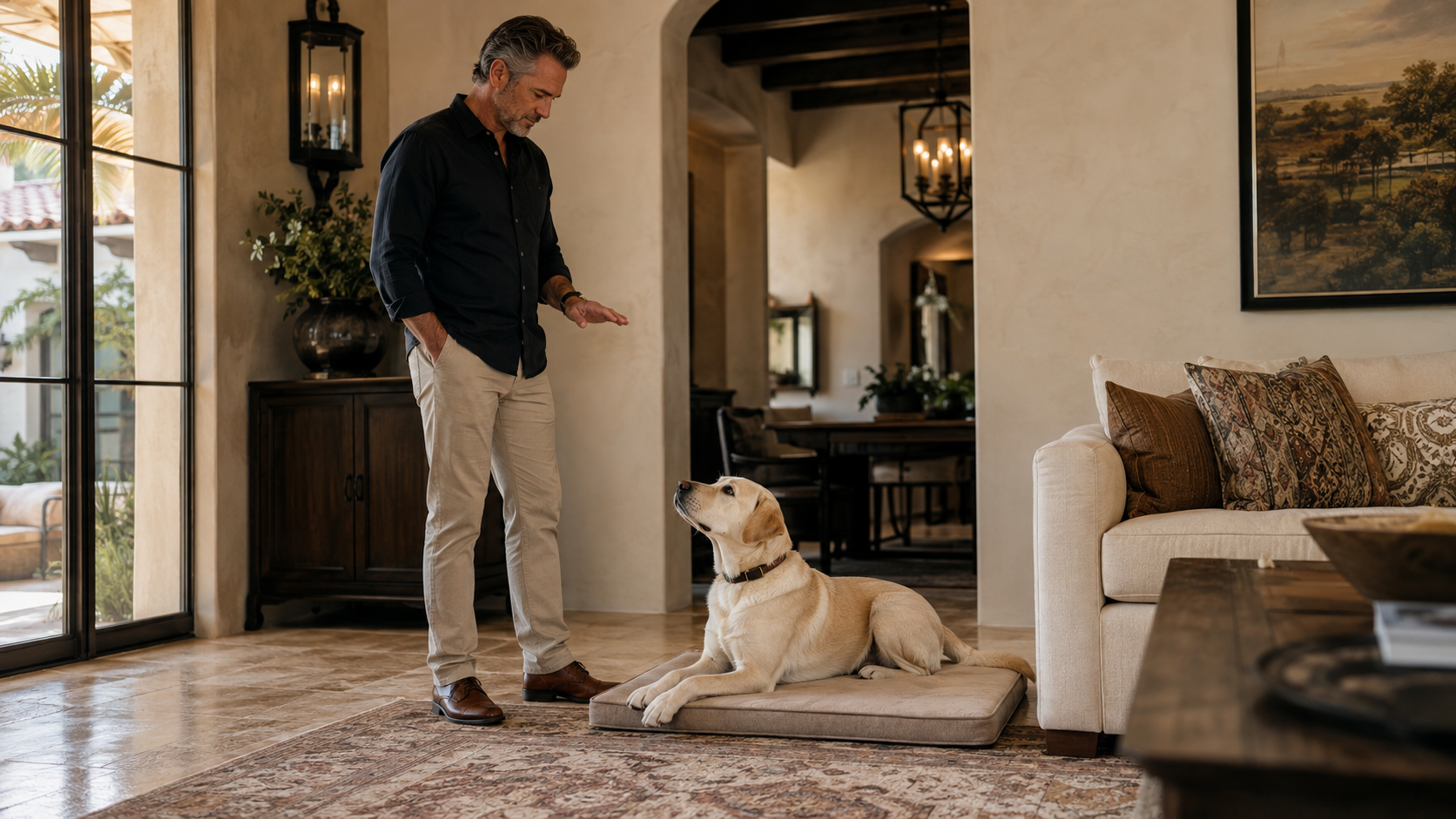
Your job is not to go home and invent new training. It is to reinforce what your dog already knows. Make your words mean what you say. When you give a command your dog understands, follow through and hold the dog accountable for doing it.
Professional training can establish the foundation, but no trainer can permanently maintain that foundation from outside your home. What happens afterward—in ordinary life, day after day—is what determines whether good training becomes a lasting part of the relationship between you and your dog.
We do the training. We teach you how to use it. Your responsibility is to make sure that training continues to mean something.
Your Dog Is Always Learning
A training program may end, but your dog's learning does not.
Once your dog returns home, everyday life continues shaping behavior. The way you respond to your dog—what you allow, what you reinforce, and what you correct—either strengthens the training that was put in place or slowly changes it over time.
This is why the owner's participation matters so much to lasting results.
I sometimes describe this to clients by borrowing a line from The Mandalorian: “This is the way.”
Good training establishes clear expectations. Consistency at home helps those expectations become a normal part of life with your dog.
That does not mean an owner should have to become a professional trainer. In fact, we believe the opposite. Our responsibility is to do the training, demonstrate the results, and teach you how to work successfully with your dog.
Your responsibility is to preserve what has been established.
You Do Not Need to Become a Dog Trainer
One of the reasons people hire a professional is because they do not want dog training to become another full-time responsibility.
It shouldn't.
Your role is not to understand every training technique, troubleshoot every behavior, or become an expert in dog training. That is part of what you hired us to do.
Your responsibility is to understand your dog, know what the dog has been taught, and know how to reinforce those expectations correctly.
That is why the transition from trainer to owner matters. We do not simply demonstrate what your dog can do and send you home. We have you work with your dog so that you can experience the training yourself, ask questions, and receive guidance where needed.
From there, maintaining good training should become a manageable part of everyday life—not a second profession.
You don't need to become your dog's trainer. You do need to become your dog's handler.
Make Your Words Mean What You Say
One of the simplest things we tell our clients is also one of the most important:
Make your words mean what you say.
Once a dog has been taught what is expected, the owner becomes responsible for preserving that clarity. Expectations that are routinely reinforced remain meaningful. Expectations that become negotiable eventually lose their value.
This is where leadership and consistency become important.
Leadership does not mean intimidation, confrontation, or constantly controlling your dog. It means providing clear direction and being willing to follow through on the expectations your dog has already been taught. Consistency makes those expectations predictable.
Over time, the dog understands that the rules do not change according to convenience, distraction, or circumstance. There is less negotiation and less confusion.
For the dog, it simply becomes:
This is the way.
Accountability Is Part of the Agreement
Training creates an understanding between you and your dog. When the dog clearly understands what has been asked, there should also be an expectation that the dog follows through.
That is accountability.
Accountability is sometimes mistaken for punishment. They are not the same thing. Fair accountability begins with making certain the dog understands what is expected. A dog cannot reasonably be held accountable for something it has never been taught or does not understand.
Once that understanding exists, however, commands should not become suggestions.
The owner's responsibility is to maintain the standards established during training. How that is done appropriately depends on the dog, the training, the situation, and what the owner has been taught.
This is one reason the transfer of training from professional to owner matters so much. We want our clients to leave knowing not only what their dog knows, but how to responsibly maintain those expectations.
Clarity tells the dog what is expected. Accountability helps keep that expectation meaningful.
A Little Time Goes a Long Way
Maintaining a trained dog should not consume your day.
For the first couple of weeks, we ask our clients to spend 10–15 minutes each day playing with and exercising their dog, along with four five-minute training sessions spread throughout the day covering what the dog already knows.
Just as important is what happens between those sessions. Throughout the day, reinforce the training as opportunities naturally arise. The goal is for what the dog has learned to become part of everyday life rather than something that exists only during a scheduled training session.
As the dog and owner settle into that routine, the need for four dedicated sessions each day diminishes. Reinforcement increasingly becomes part of simply living with the dog.
And don't forget to enjoy your dog.
Training should support the relationship you have with your dog, not become the entire relationship. Play, exercise, companionship, and time together matter.
The goal is not to spend your life training your dog. It is to enjoy living with a well-trained one.
The Whole Household Matters
A dog does not live with only the person who attended the training lesson.
Spouses, children, family members, and others who regularly interact with the dog can either support the expectations that have been established or unintentionally undermine them.
That does not mean everyone in the household must handle the dog in exactly the same way or have the same level of responsibility. It does mean the household should have a common understanding of the dog's rules and expectations.
If one person consistently maintains those expectations while another routinely allows exceptions, the dog receives conflicting information. Over time, the dog may learn that the rules depend upon who is present.
Part of the owner's role is helping create consistency within the home. The objective is not to make the household rigid. It is to give the dog one clear, dependable standard to live by.
When Training Begins to Slip
Even with a well-trained dog and a committed owner, things can occasionally begin to slip.
The important thing is not to ignore it.
Small changes can become new habits when they are repeatedly allowed. Addressing them early is generally much easier than waiting until the original expectation has been replaced by something else.
This is also where professional support matters.
If you are unsure why something has changed or how to address it, you should not have to guess. Armor K9 provides lifetime guidance for the training we provide because our relationship with a client does not simply end when the training program does.
Your responsibility is to remain engaged. Ours is to remain available when you need guidance.
Training Creates the Foundation. Ownership Preserves It.
Lasting training results are a partnership.
Our responsibility is to provide the training we agreed to provide, demonstrate what your dog knows, and teach you how to work successfully with your dog.
Then the responsibility begins to shift.
You reinforce what your dog knows. You make your words mean what you say. You maintain fair expectations and hold your dog accountable for what it understands. You provide exercise, play, companionship, and the consistency that allows training to become part of everyday life.
None of that requires you to become a professional dog trainer. It requires you to remain an involved owner and capable handler.
A well-trained dog represents an investment of time, effort, and resources. Maintaining those results requires comparatively little, but what you do consistently matters.
We will continue to be available when you need guidance.
Because the goal was never simply to give you a dog that completed training.
The goal is for you to enjoy living with a well-trained dog for years to come.